
Understanding the warning signs, how it’s diagnosed and why effective treatment can improve your health and quality of life
A person can spend eight or nine hours in bed and still wake up exhausted.
For people with sleep apnea, the problem is not necessarily how long they sleep but how often their breathing is interrupted and their brains are pulled out of deep sleep.
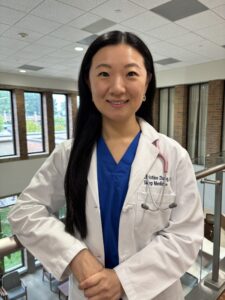
“Patients with sleep apnea can sleep long hours but still wake up feeling just as tired, if not more tired, than when they went to bed,” says Dr. Christine Zhang, a sleep physician at MedStar Montgomery Medical Center and assistant professor of medicine at Georgetown University.
Sleep apnea is common, treatable and frequently undiagnosed. Many people assume snoring is harmless. Others sleep alone and have no one to notice that they stop breathing.
More than snoring
Obstructive sleep apnea, the most common form, occurs when something physically blocks the upper airway.
“The way I explain it to my patients is that it’s a mechanical obstruction somewhere along the airway where air just physically cannot get through to the lungs,” Zhang says.
That obstruction causes oxygen levels to drop repeatedly and forces the brain to briefly wake the sleeper so the airway can reopen.
“The sleep apnea is causing your brain to wake up,” Zhang says. “It’s causing microarousals throughout the night, taking you from deep sleep out into the lighter stages of sleep.”
Those awakenings may be so brief that a person does not remember them. But they prevent restorative sleep and place stress on the body.
A less common form, central sleep apnea, occurs when the airway remains open but the brain temporarily fails to tell the body to breathe.
“For central sleep apnea, the brain is not telling the body to breathe,” Zhang says. “The airway is clear. You want to breathe, but the control center is not telling your body to breathe.”
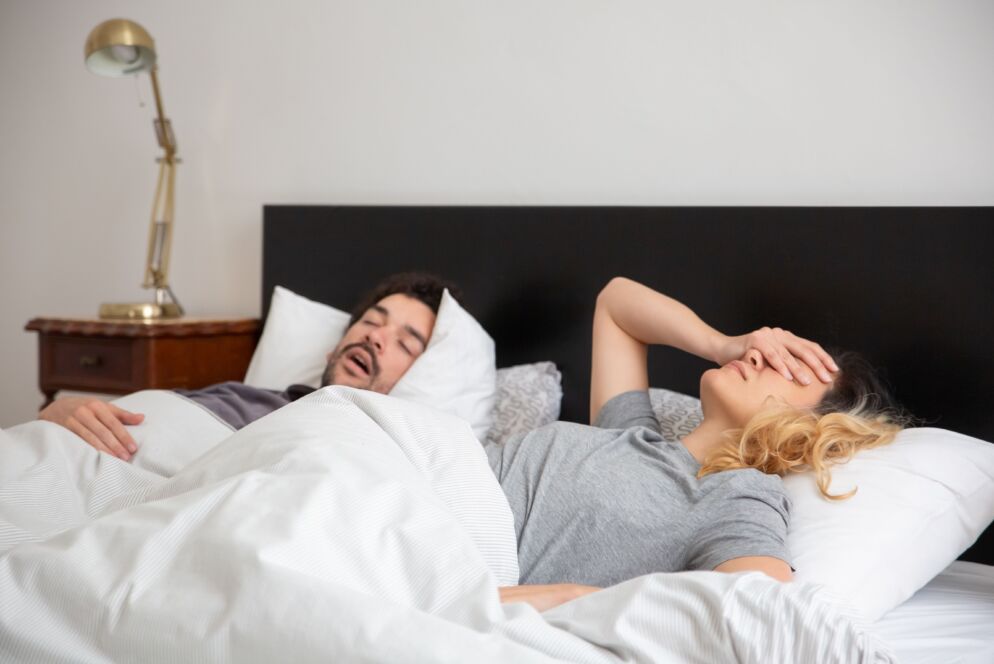
Loud snoring is one of the best-known warning signs, but it is not the only one. A bed partner may hear snoring followed by silence and then choking or gasping.
Other symptoms include morning headaches, dry mouth, nighttime awakenings, difficulty concentrating and persistent daytime fatigue. Frequent trips to the bathroom may also be connected to untreated sleep apnea.
“You don’t have to snore to have sleep apnea,” Zhang says. “That’s a common misconception.”
Sleep apnea can affect children, women and people of normal weight.
“You don’t need to be an obese male with a large neck to have sleep apnea,” she says. “Children can have it as well, and people with a normal BMI can also have it.”
In some patients, the obstruction results from anatomy rather than weight.
“It can be due to the crowding of the airway, which can be genetic,” Zhang says. “If you have a large tongue or a small chin, these are anatomic obstructions in the airway.”
Risk also rises with age and after menopause. Alcohol can worsen apnea because it relaxes airway muscles. Certain sedatives and muscle relaxants may have a similar effect, while opioids can contribute to central sleep apnea.
Getting a diagnosis
Diagnosis usually involves either a home sleep apnea test or an overnight study in a sleep laboratory.
Many adults without complicating medical conditions are appropriate for a home test, Zhang says.
“If somebody has a moderate to high risk of sleep apnea, I recommend they go for the home sleep test,” she says.
If the test is negative but symptoms remain concerning, a doctor may recommend an in-laboratory study. Patients with advanced heart failure, suspected seizures or unusual nighttime behaviors may also require laboratory testing.
Consumer watches and sleep trackers may alert users to changes in nighttime oxygen levels, but they cannot diagnose sleep apnea.
“The watch has no idea if the patient is even sleeping or not,” Zhang says. “The only way to really know if someone is sleeping is by doing the in-lab sleep study with the EEG monitoring their brain waves.”
Finding the right treatment
Once apnea is diagnosed, treatment depends on its severity, cause and the patient’s preferences.
Continuous positive airway pressure, or CPAP, remains the standard treatment. A machine delivers air through a mask to prevent the airway from collapsing.
“CPAP is the gold standard because we know that it works and it’s noninvasive,” Zhang says.
Some patients struggle with nasal congestion, claustrophobia or the equipment. Trying different masks or gradually becoming accustomed to the device can help.
“They first start off wearing it while they’re awake, watching TV, and then slowly adjust to wearing it at night,” Zhang says.
Alternatives include dental appliances that move the lower jaw and tongue forward, positional therapy for people whose apnea occurs mainly while sleeping on their backs, and implantable nerve stimulators.
For patients whose apnea is related to obesity, another option became available in 2024, when the Food and Drug Administration approved Zepbound, the brand name for tirzepatide, for adults with obesity and moderate-to-severe obstructive sleep apnea. The medication is intended to be used with a reduced-calorie diet and increased physical activity.
“I think that it is very significant,” Zhang says. “The fact that it reduced it so significantly is amazing.”
She cautioned that losing weight may not eliminate apnea caused by a naturally crowded airway. Patients who lose substantial weight should undergo another sleep study before discontinuing treatment.
For some people, treatment produces dramatic changes.
Zhang recalled a patient who was dozing while driving, struggling at work and unable to remain awake for his children. A sleep study showed very severe apnea.
“He got on CPAP and his life has been changed,” Zhang says. “He now can stay awake all day. He’s able to be there for his children. He’s able to be functional for work. He is no longer a danger on the roads to himself and others.”
The improvement, she says, was “night and day.”
“Sleep is something that affects your entire body,” Zhang says. “If you can sleep better, then your mood is better, your overall health, your quality of life. You work better. You’re more productive.”
Her message for people who continually feel tired is hopeful.
“This is something treatable,” Zhang says. “We have so many good therapies now.”