By Dan Collins
Ask a typical Baltimorean about horse racing and one word invariably springs to mind: Preakness.
But Maryland’s connection to the equestrian arts runs far deeper than one 19th-century bay colt for whom the Triple Crown’s second jewel is named. Maryland is considered the birthplace of organized racing in the U.S., with the Maryland Jockey Club established in 1743. The first “official race” followed in Annapolis in 1745.
“The history of horse racing in Maryland is well-established. The Maryland Jockey Club goes back to George Washington’s day. Maryland loves horses — the steeplechase races at Laurel once a year, the bridge to racing immortality, which is the Preakness,” said Dan Illman, former Daily Racing Form correspondent and now communications director of the Maryland Jockey Club.
For Maryland-based trainer H. Graham Motion, whose efforts guided Animal Kingdom to a Kentucky Derby win in 2011, the sport is inseparable from the state’s identity. Motion won his first race in 1993 at Laurel Park and, by 2024, had celebrated more than 2,700 victories.
“Racing makes Maryland, Maryland — horse ownership, equestrian events around Baltimore like fox hunting, steeple chasing — horse racing’s roots are very strong. We’re a community,” Motion said.
On Feb. 10, Maryland racing lost one of its most recognizable figures when King T. Leatherbury — known as the “King of the Claimers” — died at age 92. Claiming races, in which every horse is for sale at a predetermined price, were Leatherbury’s domain. His six-decade career made him a legend, and, to many, his death closed a chapter in Maryland racing.
“They called them the ‘Big Three’ (Leatherbury, Grover G. ‘Buddy’ Delp, and Richard E. Dutrow Sr.), they dominated the claiming ranks. I do think King’s passing marks an end of an era. I came up when he was at his peak, in 1992 or 93. I just missed Dutrow, and my stable was next to Buddy Delp and King was at the stable gate at Laurel. They were iconic. Maryland is no longer the powerful breeding operation of those days,” Motion said.
Trainer Brittany T. Russell, a leading Maryland conditioner since 2018 with over 500 wins, and the first woman to ever lead the annual trainer standings in Maryland, sees both loss and opportunity.
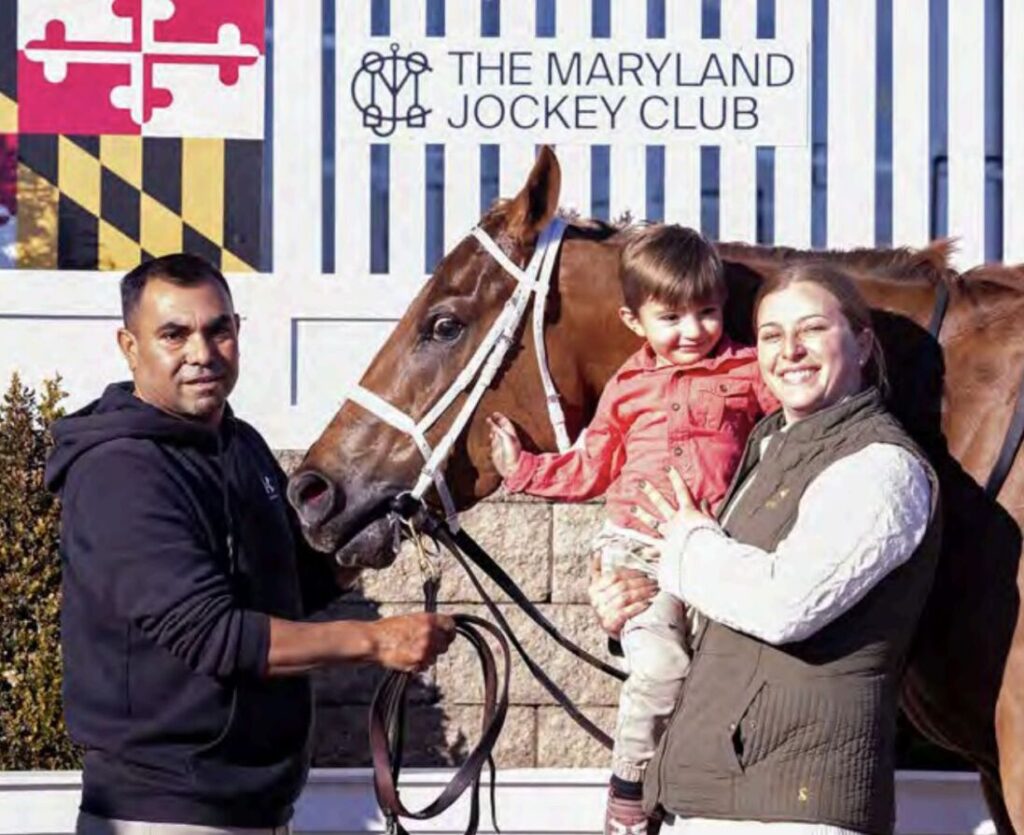
“A lot has changed since back in the day of King Leatherbury, but we’re looking to the future for positive change. Pimlico is being revamped — I like the rebirth of it. Change is good, we need to evolve and find ways to improve racing,” said Russell.
As Kimberly K. Egan, former president of the Maryland Horse Council, wrote in a 2023 byline article in The Equiery, “The 1970s and 80s were the Golden Age of Thoroughbred breeding and racing in our state. … There were three one-mile tracks with signature races. We all agree that era has ended.”
Maryland’s racing prominence was built in its fields as much as at its tracks. In 1747, Provincial Governor Samuel Ogle imported the thoroughbreds Spark and Queen Mab to Belair Stud in Bowie, earning it the nickname “Cradle of American Racing.”
That legacy still resonates with Dr. Mike Golden, DVM, who owns racehorses under Sycamore Hall Farm in Chesapeake City, Maryland.
“There’s a lot of history with breeding horses in Maryland. Probably the best stallion of all time, Northern Dancer, was a stallion at Winfield Farm in Chesapeake City,” he said.
When Winfield Farm closed in 1988, Golden’s father, Richard, along with Allaire DuPont, owner of five-time Horse of the Year, Kelso, and noted veterinarian and 10-time Maryland Breeder of the Year, Dr. Tom Bowman, acquired the property and established Northview Stallion Station. Today, Golden and his sister, Lisa Hofstetter, operate the farm.
“I think the breeding aspect is critical; maintaining farmland for the industry is critical. We are striving to bring and keep top stallions in the state that are better quality, that are affordable to local breeders. Ellen Charles (Maryland-based horse owner, breeder, operates Hillwood Stable) who owned Post Time (multiple stakes winner, now retired to stud at Northview) is committed to breeding in our state. Post Time has the opportunity to be an extremely successful stallion; he’s the type of horse we need to keep locally. Ellen Charles has bred Post Time to over 100 mares this year, and that’s really good,” Golden said.
Owner Elliott Campbell, who leads ZWP Stables in Maryland, echoes that focus: “For Maryland racing to really stay on the map, we have to take a good hard look at the stallions that perpetuate our game.”
If breeding shapes Maryland’s racing future, the fate of Pimlico and Laurel dominate the present.
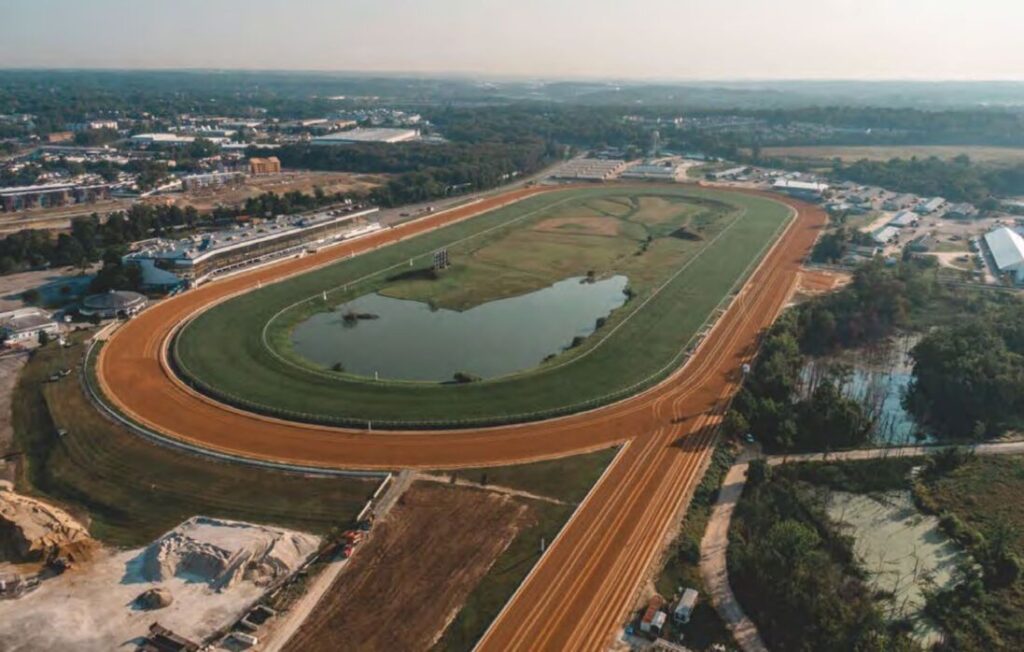
In 2024, legislation authorized up to $400 million in bonds for demolition and reconstruction of Pimlico Race Course. The barns and outbuildings near Winner Avenue were razed last July under the direction of the Maryland Stadium Authority. The goal is ambitious: reopen in time for the 2027 Preakness, with Pimlico to serve as Maryland’s sole active racetrack.
Meanwhile, Laurel Park, currently owned by Canada’s Stronach Group, is being considered for state purchase and conversion into a training center. There are concerns.
Golden acknowledges a fondness for Laurel. “Going back in time, racing at Laurel was just incredible, with the Washington D.C. International (the 1½-mile Grade 1 invitational turf horse race for 3-year-olds and up, held annually at Laurel Park, 1952 to 1994) … Laurel serves a group of people closer to the D.C. metro area who may not want to deal with a drive to Pimlico on a consistent basis.”
Campbell adds, “I was one of the few people who thought we should just move the Preakness to Laurel,” but admits, “one could make a case that it doesn’t make a lot of sense to have two fully functional tracks 40 minutes away from each other.”
Both are appreciative of taking the reins of the sport, as The Stronach Group, which had run day-to-day racing operations at Pimlico and Laurel and was a key player in the game for decades, is departing the stage.
“With uncertainty comes opportunity. The people who are involved are really committed to making this work. It’s exciting, a little scary, but there’s the hope we can make the sport stronger and viable for a long time. Did you know that Maryland has the highest density of horses per square mile in the U.S.? 7.5 to 10.5 horses per square mile,” Golden said.
“We are finally in the driver’s seat. We have Pimlico for racing, Laurel for training, those problems are solved, the decisions made. Now it is up to us,” Campbell said, emphasizing the importance of breeding winners. “Imagine the city chatter if we had a Maryland-bred win the Kentucky Derby.”
Motion believes the shift in governance could empower local stakeholders. “We are in very control of our future, the trainers, owners and breeders. Hopefully, this means we control our own destiny. Some states don’t have the strength of the horsemen’s group in Maryland, and that way was set up by our predecessors; that’s why we’ve stayed strong,” Motion said.
Illman sees several reasons for optimism: stronger wagering handles, continued growth of Maryland Million Day — launched by legendary broadcaster Jim McKay — and expanding the Preakness into a week-long celebration akin to Derby week at Churchill Downs.
He also points to Maryland’s tradition of developing young riders.
“Maryland has always been a breeding ground with apprentice riders, like Alberto Delgado (1982 Champion Apprentice Jockey, 43-year career with 2,951 wins, $42 million in earnings) and now Yedsit Hazlewood, just 17 years old, leading all jockeys in wins,” Illman said.
“This kid is setting the world on fire,” Campbell said of Hazlewood, a native of Panama. Based in Laurel, Yedsit, who won 95 races in 2025, earning the 2025 Laurel Fall Meet title, “should have won” the 2025 Eclipse Award for Outstanding Apprentice Jockey, though he was a finalist. “Maryland is the breeding ground for world-class jockeys, and this kid is the next one.”
Looking to Cecil County, there’s a new one-mile turf course featuring Kentucky bluegrass with advanced irrigation and drainage systems, promising both flat and steeplechase racing.
“We have an exciting new turf course at Fair Hill,” Motion said. “We expect a state fair-style atmosphere. I hope to run horses there.”
For more positives, look to the numbers.
According to the Maryland Horse Council, about 4,500 working horses are part of the racing and breeding sector. The thoroughbred sector alone supports more than 8,000 jobs and contributes about $600 million annually — almost 30% of Maryland’s entire horse industry.
Meanwhile, the non-racing side of the industry is described as “robust and thriving,” with a nearly 70% increase in licensed stables over the past decade.
And there are fans. According to a 2023 survey conducted by the American Horse Council for the Maryland Horse Council, there are nearly 720,000 “horse-enthusiast households,” which represents nearly a third of Maryland homes. Maryland is also earning recognition for its commitment to retired racehorses.
“Because horse racing is more than racing — it’s breeding, and raising horses and giving them a good life after they’ve done racing. ‘Beyond the Wire’ repurposes these horses for dressage, jumping, so many equine programs … At Northview, we donate 5% of stud fees to Beyond the Wire,” Golden said. Based in Maryland, Beyond the Wire has retrained and rehomed nearly 900 Thoroughbreds since its founding nine years ago.
For all the uncertainty surrounding Pimlico’s reconstruction, Russell remains hopeful. “I don’t know what’s going to happen with Pimlico. I have no crystal ball, but I hope for positivity and improvement,” Russell said.
View this post on Instagram
But what gives Maryland’s racing future its best chance might be something fundamental, grounded in its nearly 300-year history: Motion’s “community.” Family.
“I have two small children, and it’s a very family-oriented business. My husband (Sheldon Russell) has been one of the leading riders in Maryland for years. We’re raising our kids here,” said Russell. “It’s such a big industry, but I look at the guys in my barn. We’re a team. A family.”
Golden shares that view. “It all comes down to having good people at the farm, having people you can trust. I’m optimistic about it (the future) because we have a lot of good people involved who are passionate,” Golden said.
“There’s a lot of personalities in horse racing like King Leatherbury. And there are opportunities for people to get involved through syndicates where they can own part of a horse. Hopefully, that will evolve too. But the future of Maryland racing lies in the fact we have a lot of good people, really committed to moving forward, and making it as good as it can possibly be.”
Nearly 300 years after its first official race, Maryland racing stands at the turn — honoring its past, reshaping its present, and betting, once again, on its people.