
Tap dancers speak with their soles. And the rhythms they parcel out in scintillating syncopations reflect the heart and soul of a people. While many folks hold an image of tap as a line of synchronized dancers in shiny shoes and shinier smiles adding sparkle to Broadway and Hollywood musicals, tap’s origins have a darker history that reflects that of the United States’ slave-holding and racist past.
This indigenous American art form evolved through the confluence of cultures beginning in the pre-independence colonies. The West African giouba music and dance were brought to these shores by enslaved Africans, becoming juba. Plantation owners and masters realized drums were a chief means to communicate across distant spaces, as well as a means to preserve cultural and worship traditions. The drums were outlawed.
Enslaved peoples preserved their rhythms on their bodies through footwork and hambone — slapping out rhythms on the thighs. When Africans in America connected with working-class Irish immigrants, who had brought the jig and clogging to these shores, tap was born. Some attached metal plates to the toes and heels of their shoes creating America’s home-grown percussive form, which found its way into minstrel shows, vaudeville, Broadway and Hollywood.
Tap remains a vital art form today. Ask second-generation tap dancer and educator, Lisa Swenton-Eppard: “You can find tap dance in every corner of the world now. There are tap festivals almost every weekend of the year all over, and it’s still growing.” A Gaithersburg resident, Swenton-Eppard has been teaching tap since she was a teenager growing up in Bryans Road, Maryland. Her organization, Percussion Discussion, both preserves this unique American art form and supports its innovation and propagation.
Capitol Tap, the oldest arm — or should that be leg? — of Percussion Discussion, was founded in 2010, at the request of parents and teens who had danced with the now-defunct youth tap company Tappers With Attitude. When that renowned Silver Spring-based ensemble closed its doors that year, members asked Swenton-Eppard to take the helm.
“I had small children. I wasn’t looking to start my own business, but something told me to just do it,” she says. Her first call was to renowned Broadway hoofer Baakari Wilder, who cut his teeth with TWA as a child and teen, then danced with acclaimed tap-master Savion Glover in “Bring in ‘da Noise, Bring in ‘da Funk” on Broadway. She asked him, “What do you want your legacy to be here at the studio?”
As assistant artistic director, Wilder works alongside Swenton-Eppard as the organization has grown into three unique ensembles: Capitol Tap for youth from age 9 to 18; District Tap, founded in 2016, for advanced adult dancers; and Monumental Tap, founded in 2023 for intermediate adult dancers.
All three ensembles meet to rehearse weekly at Knock on Wood Tap Studio, right across the Montgomery County line in the Takoma neighborhood of Washington, D.C. One cold winter night in February, when sundown was well before 6 p.m., the sounds of staccato footwork wafted down the hallway of an old office building well before the entrance to the studio.
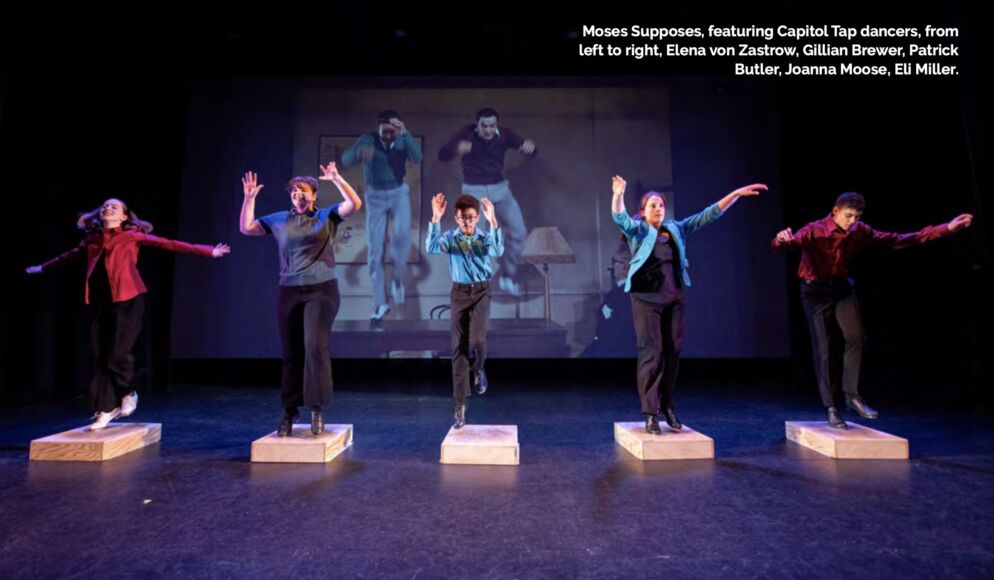
The teens warm up with Wilder, beginning with 30 jumping jacks before getting into footwork from a mid-20th century tap master. Dancers rotate across three rooms of varying sizes depending on which dance they’re working on. The largest group — the teens — is working on a number by early 20th century tap master Bill “Bojangles” Robinson — known as the Black man who dueted with Shirley Temple in her childhood hit movies during the 1930s.
“What’s the break?” Swenton-Eppard asks the teen dancers, in hopes of clarifying the muddied footwork sequence and brightening the tap sound. One demonstrates, then she asks the group to say or scat the rhythm. “Now that you can say it, can you do it?” On the second try, she nods, “There it is. Now what happens next?” In the tiniest room, not much more than storage closet size, Wilder, in his trademark purple tap shoes, works with 11-year-old Emma Bonner, the smallest and youngest dancer. He’s coaching her on modulating her notes. “Don’t rush it. Put all your weight over there … We want to play this floor with this foot … Then we want to be gentle when we’re hitting these.” She nods and tries it one more time.
Percussion Discussion emphasizes what is known in the dance world as rhythm tap, to distinguish it from highly synchronized and stylized Broadway or show tap. Rhythm tap dancers trace their approach back to tap’s origins: the need to preserve African drum rhythms. It focuses on the story of the beat and sound, rather than how it looks. This allows each performer to develop an individual style and flair, as together the group learns to dance in unison.
That means Percussion Discussion educates dancers not through rote exercises in weekly classes, but by teaching them choreography from illustrious 20th and 21st century works of tap dance choreographers, as well as new works by Wilder, Swenton-Eppard and other current dancemakers, like MacArthur genius-winning tap dancer Michelle Dorrance. The students also learn by performing at venues as varied as the Kennedy Center, Atlas Performing Arts Center and Dance Place, all in the District, along with venues in Montgomery County, including Knock on Wood’s annual tap showcase.
For Swenton-Eppard, even as she attains highly professional results from teen student dancers, and adults who have full lives and day jobs, she’s most interested in preserving tap dance’s rich heritage and passing it on to new generations. As she oversees her three companies, she assigns specific dancers to take on the role of dance captain. She also often asks one dancer who has mastered a step to coach another who needs assistance, or selects dancers to lead off a group work or section. It’s a subtle way of inculcating leadership skills for both the teens and adults.
Trent Harris, Jr., of Chevy Chase has been dancing for 10 of his 13 years. In his third year with Capitol Tap, he says the camaraderie among the dancers keeps him coming back. “We’re all good friends here,” he noted, adding that his favorite step is the draw back, which really shines in his turquoise shoes.
Montgomery Blair High School senior Eli Miller, 17, spends about five hours a week at the studio between rehearsals and tap classes. “I’ve danced here forever,” he says. “I like being able to dance in a structured, formal way,” he adds. “We have something to work towards,” he nods in the direction of the other dancers on the floor.
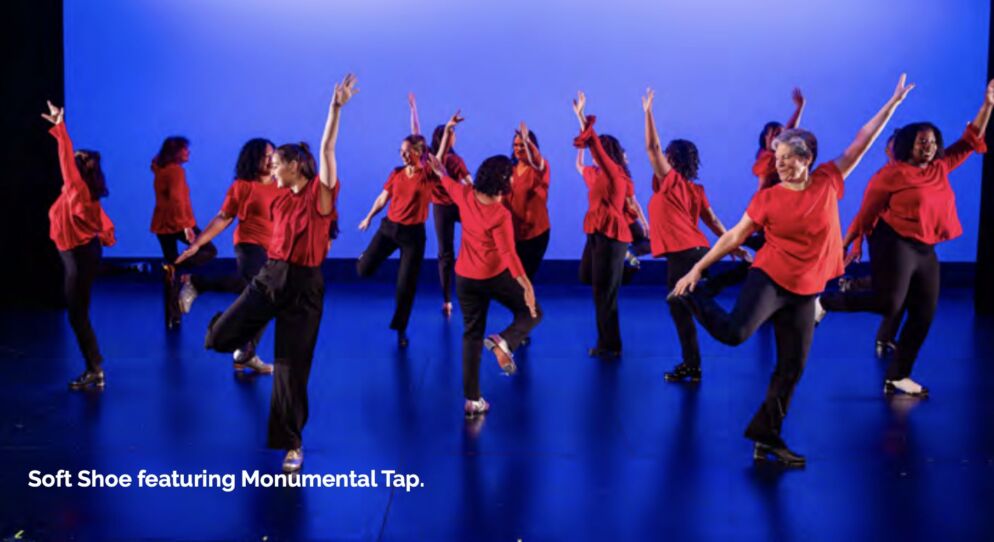
Later on, 12 of the 14 women in Monumental Tap, clad in a variety of yoga pants and T-shirts, and one still wearing her black skirt and blouse office attire, practice a soft shoe number called “Easy Does It.” Wilder advises these dancers: “Focus on each other and have a conversation with your feet and your eyes.”
An adult tap student at KOW for a decade, Denise Love is an original member of Monumental. “I’ve been tapping for years,” she says. “I teach tap to seniors at Holiday Park [Senior Center] in Silver Spring. … Studying under Lisa and Baakari, I learn so much and I enjoy how we all have something in common” — the love of tap.
Katharine Manor started tap classes at age 4. She grew up performing with Tappers With Attitude and Capitol Tap. Now, at 30, she is a very experienced dancer in District Tap. A mom of two, she says she tries to sign up for as many gigs as possible. “Tap is my safe space,” says the Rockville resident. “It’s where I can create. It’s where I find joy. It’s where I can be vulnerable and comfortable. It’s my heartbeat.”
For more information on Percussion Discussion and its upcoming performances and auditions, visit capitoltap.com/capitol-tap.