
By Zoe Bell
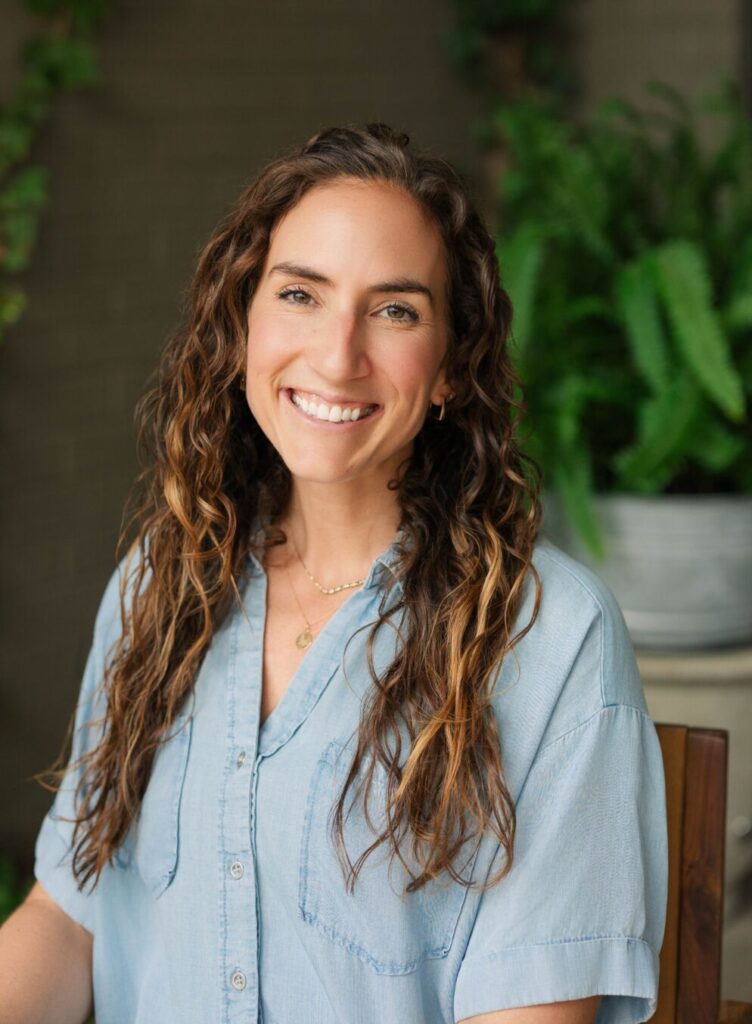
Michelle Bronzo has made it her profession to help people navigate one of the worst times of their lives: the death of a loved one.
The Potomac resident sees a broad array of clients experiencing grief, loss or cancer, mostly virtually through her private practice, Michelle Bronzo Counseling LLC. A grief counselor with more than 15 years of experience, Bronzo views this work as necessary, especially given the stigma around loss.
“I think it’s really meaningful to get to walk alongside people at this time,” Bronzo says. “People don’t tend to like to talk about death and dying, so I like to be a place where people feel comfortable coming.”
Helping people navigate grief and loss is deeply personal for Bronzo, who lost her brother to suicide when she was 14 and her father to cancer when she was 18.
“From a young age, I saw how different it could feel to grieve depending on the situation and the loss type,” Bronzo says.
Her brother’s death was traumatic and sudden, whereas her father had been ill and underwent treatment for two years before he passed.
“A big part of what I help people do is establish continuing bonds — it’s the relationship they continue to have with somebody after they’ve died, and I see my work as an extension of that for myself,” she says. “It’s part of my continuing bond with my dad and brother to be able to do this work on their behalf.”
A lot of people can do the work of a therapist because every individual brings unique skills to the job, Bronzo says, so there are many styles.
“My personal style that I feel works well, especially in grief and loss work, is being able to hold space for people,” she says. “[I’m] not afraid to ask the questions that they might be scared to voice themselves. I like to think that I’m someone who can listen, that I’m compassionate. It’s a great privilege to help people make meaning out of their life and their losses.”
About 10 to 15% of bereaved adults develop prolonged grief disorder, an intense, persistent grief that interferes with daily life, according to Bronzo. Risk factors include the sudden or violent death of a loved one, losing a child or partner, a personal history of depression or trauma, and a lack of social support.
Prolonged grief disorder requires a different approach than traditional talk therapy, Bronzo says, which she is specially trained in.
“A big part of the Prolonged Grief Therapy protocol is an intervention called imaginal revisiting, which involves having the person revisit the story of the time their loved one died, and helping them integrate that story with a marked reduction in emotional distress,” she says. “I’m not afraid to hear the details of what can be very challenging material to talk about and to have others hear. I think my own loss history and my comfort with my losses allows me to be there for my clients in a way I wouldn’t have been able to do had I not had these experiences.”
Bronzo’s work also extends beyond her office.
“Because people know I do this work, I tend to be a resource for people in the community when either they’ve had someone in their life die or they’re dealing with anticipatory grief issues or someone has a cancer diagnosis,” Bronzo says. “Whether it be at the preschool or my daughter’s elementary school, or just in general in the community, I feel like people come to me for support and guidance around that … They know they don’t have to worry about upsetting me because this is what I do for my work.”
Bronzo opened her private practice in November 2020. Before that, she worked as an oncology clinical therapist at Life With Cancer through the Inova Schar Cancer Institute.
She generally begins working with clients weekly, then might reduce the frequency of appointments as time goes on and they’re in a better mental space.
“My goal is that people don’t stay with me forever,” Bronzo says. “I see myself as scaffolding to people, and that we can dismantle it little by little as they feel their own internal strengths are growing. I want people to be able to stand on their own two feet, to feel like I’m a part of their healing, but that they are the ones who ultimately rewrite their own life stor[ies].”
Another large part of her life is volunteering. She is a member of Montgomery Hospice’s Threshold Choir, a nonprofit group that sings at the bedside of hospice patients. Their repertoire covers a wide range of gentle, nonreligious songs in three-part harmony.
“It’s been really special to integrate two things that I love so much: singing and end-of-life work,” says Bronzo.
She’s also been active with her youngest’s preschool — it’s her fifth year serving on the parent board of the Bethesda preschool.
Bronzo described herself as someone who “always likes to get involved.”
“I always sign up for stuff,” she says. “I like to be an organizer. I like to bring people together. I like making connection[s], so that felt like a natural fit to me.”

