
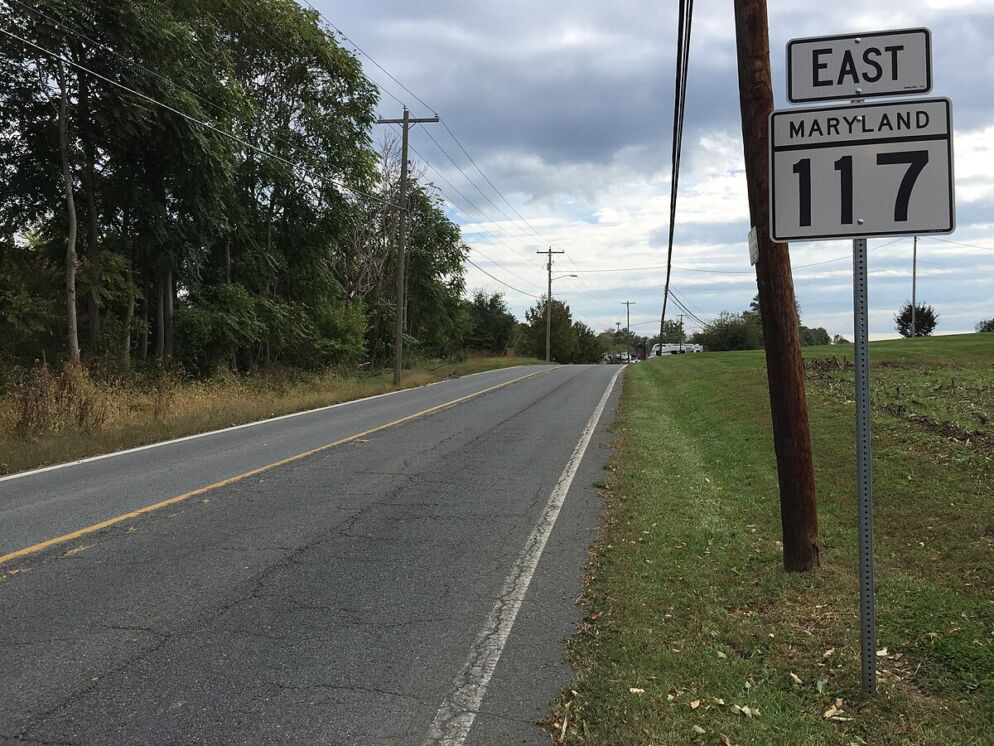
“Country roads, take me home / To the place I belong …” The next lyric is “West Virginia,” but John Denver’s first platinum single — and the state’s unofficial anthem — was inspired by a country back road in Gaithersburg.
In 1970, local singer-songwriters Bill Danoff and his then-girlfriend Taffy Nivert had been driving down Clopper Road en route to a family reunion. Montgomery County was much more rural than it is today. At the time, Clopper Road was a “little two-lane blacktop” rather than an exit off Interstate 270.
Nivert navigated the winding roads as Danoff sat in the passenger seat strumming a guitar.
The two played around with lyrics, imagining a song for Johnny Cash.
“I just started thinking, ‘country roads’; I started thinking of me growing up in western New England and going on all these small roads,” Danoff tells NBC4 Washington. “It didn’t have anything to do with Maryland or any place.”
I’m a songwriter,” he adds. “I was looking for words. The words that I loved in that song were Blue Ridge Mountains, Shenandoah River. They’re songwriter words, so that got me to West Virginia.”
Notably, Danoff had never ever been to West Virginia. He was originally from Massachusetts, according to Len Jaffe, a D.C.-based singer-songwriter who was present for the song’s debut.
“When they got to the ‘almost heaven’ [part of the song], at first it was going to be Massachusetts … but they didn’t like the vibe, so they used West Virginia,” Jaffe tells WTOP News.
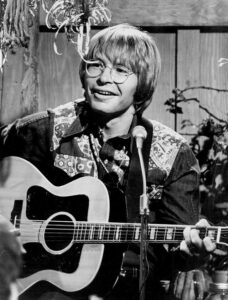
Popular folk and country singer John Denver performed a sold-out show in the “tiny” Cellar Door D.C. nightclub in late December 1970, the first of a series of solo shows there. His openers were none other than Danoff and Nivert, who performed together as Fat City.
Denver was seeking more music for an upcoming record.
After the fourth show, Denver, Danoff, Nivert and some other friends arranged to meet up at the couple’s Georgetown apartment for a jam session. The soon-to-be-bestselling artist was a no-show.
“After an hour, they weren’t there and we were worried,” Danoff tells NBC4 Washington.
Then Danoff received a phone call from the George Washington University Hospital’s emergency room. Denver had been in a car accident and broke his thumb on the car’s windshield.
Despite the injury, Denver came straight to Danoff’s apartment. Danoff wanted to create the next hit song for bigger artists, but he hadn’t had much luck.
Denver hadn’t seen success in that department either; NPR reports that the artist “had trouble filling a room” before releasing his 1971 album “Poems, Prayers, and Promises.”
Everything was about to change for Denver, who was practically “unknown” as a soloist.
He asked Danoff and Nivert if they were playing any new songs. “Taffy said, ‘Get out that song you’re writing for Johnny Cash,’” Jaffe tells WTOP.
“I said, ‘[Denver] won’t like that. It’s not his thing,’” Danoff says in an interview with NPR, fearing that the song was “too country” for the artist.
Danoff produced the partially written song that was composed of one chorus and one verse, and played what he had so far. At that point, he’d been working on “Country Roads” for several months.
“‘Wow, that’s great! That’s a hit song! Did you record it?’” Denver had said, according to Danoff.
No, Danoff didn’t have a record deal. He, Nivert and Denver burned the midnight oil adding to the lyrics and finalizing the song by morning.
“John’s incredible energy was what made it happen,” Danoff admits to NBC4 Washington. “Left to my own devices, I would have had another beer and played another song.”
Months later, Danoff and Denver traveled to New York City to record the hit. The first recording had “way too much echo,” in Danoff’s opinion, but by August 1971, it had peaked to No. 2 on the Billboard singles chart.
“Take Me Home, Country Roads,” or simply “Country Roads,” became the official song of the West Virginia University Mountaineers; it’s been performed at every home football pregame show since 1972.
Danoff has since visited picturesque West Virginia a few times and waded in the Shenandoah River. He’s been named an “honorary West Virginian.” But his big hit originated along Clopper Road, 500-some miles from the Blue Ridge Mountains.